13-24 Drive-in
Wabash, IN Photo courtesy Steve Felder
Few drive-in theaters have a name quite as practical as 13-24 Drive-in Theatre. The theater takes its unusual title from its location on State Road 13, just north of U.S. Route 24, making it easy for generations of moviegoers to find. Since opening on August 23, 1951, it has remained one of Indiana's enduring outdoor movie destinations, complete with a classic neon marquee that still welcomes visitors today. 11-10
Opening night featured the swashbuckling adventure Ali Baba and the Forty Thieves, with admission costing just 50 cents for adults. Like many drive-ins of the era, the theater catered to families with more than just movies. Children could enjoy a miniature train ride through the playground before the evening's feature began, creating the kind of all-night entertainment that made drive-ins such a beloved American tradition.
The 13-24 Drive-in Marquee
Wabash, IN Photo courtesy Mark Hackett
The marquee is one of the theater's greatest treasures. Its distinctive Googie styling is highlighted by a rare ram's head-shaped neon arrow, an unforgettable design unlike any other drive-in sign in the Midwest. Along with the original ticket booth and concession stand, it helps preserve the authentic character of a 1950s drive-in experience.
UPDATE: The 13-24 Drive-In remains open under the stewardship of the Honeywell Foundation, which acquired the theater to ensure its long-term preservation. More than seventy years after opening, moviegoers can still enjoy first-run films beneath the stars while passing through one of Indiana's finest surviving drive-in marquees. 06-26
Ford Drive-in (formerly Ford-Wyoming)
Dearborn, MI Photo courtesy Mark Hackett
The Ford Drive-In has been a Michigan institution since opening on May 19, 1950, along Ford Road in Dearborn. Originally known as the Ford-Wyoming Drive-In, it began life as a single-screen theater accommodating 750 cars before growing into one of the most famous drive-ins in America. Its opening-night feature was The Man From Colorado, starring Glenn Ford, which is a fitting choice for a theater that would become a Detroit-area landmark. 04-01
Over the following four decades, the theater expanded dramatically. By the early 1990s, it had grown to an incredible nine screens with room for more than 3,000 vehicles, earning recognition as the world's largest drive-in theater by capacity. In 2010, four of those screens were removed, returning the complex to its current five-screen layout and prompting the official name change to simply Ford Drive-In.
Even after decades of change, the property's most recognizable feature remains its impressive Art Deco-inspired screen tower. More than just a movie screen, the massive Streamline Moderne structure houses offices within its hollow frame and continues to dominate the Ford Road skyline. It stands as one of the finest surviving examples of classic drive-in architecture anywhere in the country.
Ford Drive-in (formerly Ford-Wyoming)
Dearborn, MI Photo courtesy Steve Felder
Here's a different angle to the Ford Wyoming Drive-in, including
a view of the marquee. A straight on look at the screen is just below.
UPDATE: The drive-in is now called the Ford Drive-in. They closed screens 6 thru 9 on Wyoming Avenue and had them torn down. The drive-in is still open for movies on Ford Road but it's only a five screen drive-in theatre now. Many thanks to David Hughes for update. 12-10
UPDATE: Ford Drive-In remns open year-round, making it one of the few drive-in theaters in the United States to operate through every season. More than 75 years after opening, it continues to entertain moviegoers while preserving one of America's greatest surviving drive-in andmarks. 06-26
Monticello Drive-in Theatre (Now Lake Shore Drive-in) Monticello, IN Photo courtesy Don Gardner
Just minutes from Indiana Beach, the Monticello Drive-In Theatre has been entertaining moviegoers since 1949. While the name has changed to Lake Shore Drive-In Theatre, the property continues to deliver the classic outdoor movie experience that has made it a summertime tradition for generations of families visiting Monticello and nearby Lake Shafer. 11-10
Unlike many drive-ins that relied on flashy architecture or elaborate neon, the Monticello screen tower has always stood out for its simplicity. Its clean, functional design reflects the practical engineering of the era, proving that a drive-in didn't need extravagant styling to become a local landmark. Over the years, the theater expanded from a single screen into a twin-screen operation capable of accommodating hundreds of vehicles while continuing to offer the double-feature format that has long been part of the drive-in experience.
The theater has survived thanks to dedicated local ownership. After nearly 25 years under Earl and Phyllis McLachlan, the property was purchased in late 2024 by local preservationists Ryan Harrison and Ryan Crawford, ensuring that this White County institution would continue operating for future generations.
UPDATE: Now operating as the Lake Shore Drive-In Theatre, the theater remains one of Indiana's few surviving drive-ins. Its simple screen tower still welcomes movie fans each season, preserving a piece of Hoosier roadside history just down the road from Indiana Beach. 06-26
Clarksville Drive-In Theatre (Demolished)
Clarksville, IN Photo courtesy Steve Felder
Long before sprawling multiplexes became the norm, the Clarksville Drive-In Theatre welcomed southern Indiana moviegoers with a single giant screen and room for hundreds of cars. Opened in 1950, the drive-in became a popular summertime destination for families throughout the Louisville metropolitan area, offering an affordable night at the movies beneath the stars. Steve Felder's photograph captures the theater after its closure, with the weathered marquee still standing proudly in front of the silent screen tower—a poignant reminder of an era that had already begun to fade. 04-01
Originally built to accommodate approximately 300 automobiles, the drive-in operated for more than three decades before changing entertainment habits and increasing competition from indoor multiplexes finally caught up with it. The theater closed permanently in 1984 after serving generations of local movie fans. For years afterward, both the marquee and towering screen remained standing over the vacant property, creating one of those haunting roadside scenes that naturally drew photographers documenting America's disappearing drive-ins.
The land has since been completely redeveloped, with the former theater site now occupied by the Clarksville Wastewater Treatment Facility. Nothing remains of the drive-in today, making photographs like this one an important record of a familiar local landmark that once lit up warm Indiana evenings.
UPDATE: The Clarksville Drive-In Theatre has long since disappeared, with both the marquee and screen tower demolished following the property's redevelopment. Although the movies have ended, it remains a fond memory for many southern Indiana residents who spent countless summer nights watching films from the comfort of their cars. 06-26
Oasis Drive-in (Demolished)
Davenport, IA Photo courtesy David Johnson
Few drive-ins embraced Space Age styling quite like the Oasis Drive-In Theatre. Opened in 1961 along Davenport's busy Brady Street corridor, the theater welcomed moviegoers with one of the Quad Cities' most eye-catching marquees, featuring bold geometric shapes and vibrant mid-century colors that perfectly reflected the optimism of the era. David Johnson's circa 1982 photograph captures the theater near the end of its life, when the distinctive sign was still inviting motorists to pull in for a double feature beneath one of the region's largest outdoor movie screens. 10-08
Built at a cost of approximately $300,000, the Oasis was considered one of Iowa's most modern drive-ins. Its enormous 120-foot-wide screen and 800-car capacity made it the largest drive-in in the Quad Cities when it opened. Engineers even incorporated an innovative "hairpin holdout drive" entrance, allowing vehicles to queue safely without backing traffic onto busy U.S. Route 61—a thoughtful design that earned praise in theater industry publications. Opening night on September 1, 1961, featured the double bill of Konga and The Angry Red Planet, setting the stage for more than two decades of summer movie nights.
Like many drive-ins across the country, the Oasis eventually fell victim to changing entertainment habits and increasing development pressure. It closed permanently on August 30, 1987, and the theater, along with its colorful marquee, was demolished soon afterward. Today, the site has been redeveloped into commercial businesses, leaving photographs like this as one of the few reminders of a drive-in that once brightened the north side of Davenport.
UPDATE: Nothing remains of the Oasis Drive-In today. The theater and its distinctive Space Age marquee have long since disappeared, replaced by commercial development along the Brady Street corridor. 06-26
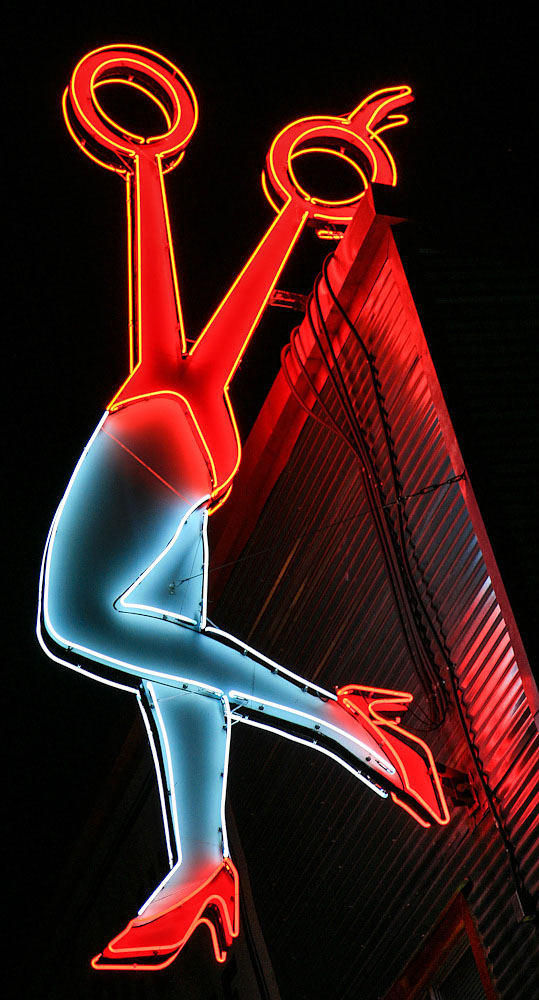



 The 13-24 Drive-in Marquee
 Ford Drive-in (formerly Ford-Wyoming)
 Ford Drive-in (formerly Ford-Wyoming)
 Monticello Drive-in Theatre (Now Lake Shore Drive-in)
 Clarksville Drive-In Theatre (Demolished)
 Oasis Drive-in (Demolished)