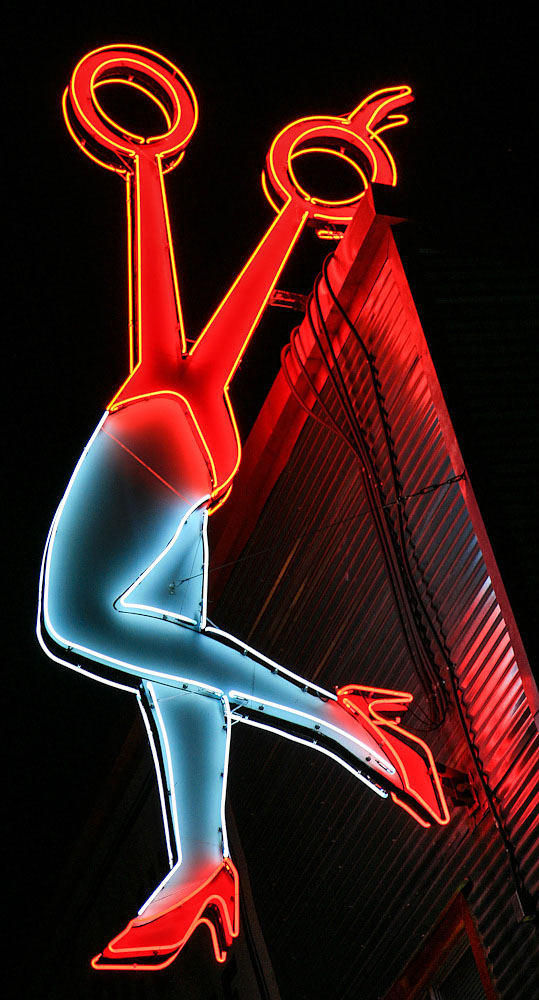
Also in the Whitefish area is the old Palace Theatre. Like many classic small-town theaters, the Palace once featured a marquee hanging out over the sidewalk, inviting locals and visitors alike inside for an evening at the movies. While Whitefish has grown from a railroad town into one of Montana's most popular tourist destinations, buildings like this help preserve a connection to an earlier era when downtown theaters were among the busiest spots in town.
The theater occupied a prominent location along Central Avenue and stood as part of the commercial heart of Whitefish for many years. By the time this photo was taken, its future as a movie theater was uncertain, but the building itself remained a recognizable part of the downtown streetscape.
UPDATE: The Palace Theatre no longer operates as a movie house, but the building remains very much alive. Today the former theater is home to the Palace Bar, a popular local gathering spot in downtown Whitefish. While the theater's original purpose has faded into history, the building continues serving the community much as it always has—as a place for people to get together in the heart of town. 06-26
Kerby Theatre (Closed)
Worland, WY Photo courtesy Don Gardner
The Kerby Theatre no longer shows movies, but it still stands as a reminder of a time when downtown Worland gathered under its marquee for an evening at the picture show. Opened in 1938 and designed by the Boller Brothers, the theater quickly became one of the community's favorite gathering places. Local memories of Saturday matinees, packed crowds, and long lines at the concession stand remain tied to the building decades after the final credits rolled.
For nearly seventy years, the Kerby served as Worland's primary movie house, entertaining generations of families in the heart of town. Even today, its familiar facade remains a recognizable landmark along Big Horn Avenue and a reminder of the era when a trip to the movies was one of the biggest events of the week.
UPDATE: The theater closed by 2007 and was later condemned due to structural concerns. Following years of vacancy, the building was boarded up to prevent further deterioration and vandalism. While the auditorium has long been silent, the Kerby Theatre still stands and remains one of the most recognizable reminders of Worland's downtown entertainment history. 06-26
Skyline Theatre
Canon City, CO Photo courtesy Don Gardner
The Skyline Theatre has been a fixture on Main Street in Cañon City for more than a century. Originally opening in 1918 as the Jones Motion Picture Theatre, it brought the excitement of silent films to Fremont County at a time when movies were still a relatively new form of entertainment. While the building's upper facade is fairly simple, the theater picked up its distinctive Art Deco touches in the 1940s when it was renamed the Skyline, giving it the classic look that still catches the eye today.
For generations, the Skyline served as Cañon City's hometown movie house. Like many small-town theaters, it weathered changing tastes, competition from larger cinemas, and shifting entertainment habits while remaining an important part of the downtown streetscape.
UPDATE: After closing in 2017, the theater was purchased by new owners who undertook an extensive restoration of the historic building. The Skyline reopened in 2023 and once again shows movies in its restored auditorium, complete with a recreated star-filled ceiling overhead. Today, the theater is temporarily closed. 06-26
Bluebird Theatre
Denver, CO Photo courtesy Mark Hackett
The Bluebird Theatre is hard to miss along Denver's East Colfax corridor. Its classic three-dimensional sign and gorgeous script lettering have been turning heads for decades, making it one of the most recognizable theater facades in the city. Originally opened in 1913 as the Thompson Theatre, the venue served neighborhood moviegoers during the early days of cinema before being renamed the Bluebird Theatre in 1922.
Like many historic theaters, the Bluebird evolved with the times. Through the years it hosted generations of movie patrons, surviving changing entertainment trends while remaining a familiar landmark along one of Denver's most storied streets. The theater's distinctive sign remains its defining feature, capturing the style and optimism of an era when a marquee was designed to stop people in their tracks.
UPDATE: After closing during the late 1980s, the theater was restored and reopened in 1994 as a live music venue. Today, the Bluebird Theatre continues to thrive as one of Denver's premier concert halls, hosting a steady lineup of national and local acts. Designated a Denver Historic Landmark, the building remains an important part of the city's entertainment history, while its iconic sign continues to light up East Colfax Avenue. 06-26
Fiesta Twin Cinema
UT Photo courtesy Kelly Coalier
The colorful Fiesta Twin Cinema is hard to miss as you make your way through downtown Cortez. With its bright multi-colored facade and retro styling, this theater still catches the eye much like it did decades ago. Originally opened in 1948 as the An Le Theatre, the building has been entertaining moviegoers for generations. While many small-town theaters have disappeared over the years, the Fiesta remains active, continuing to show current movies and serving as one of downtown Cortez's most recognizable landmarks.
The theater changed with the times, eventually becoming part of the Allen Theatres circuit and later converting from a single-screen movie house into a twin cinema. Through it all, the building has retained its presence on Main Street, proving that classic hometown theaters can still find a place in the modern movie-going experience.
UPDATE: Today, the Fiesta Twin Cinema remains open and continues to screen first-run movies for residents and visitors alike. Comfortable modern seating and updated projection systems have helped keep the theater relevant while preserving its role as a longtime downtown gathering place. Its colorful facade still brightens Main Street and serves as a reminder of the era when every town had a theater at the center of community life. 06-26
Acme Theatre
Riverton, WY Photo courtesy Don Gardner
The classic Acme Theatre has been a fixture on Main Street in Riverton for more than a century. Still showing current movies today, this old theater is a reminder of a time when a night at the picture show was one of the biggest events in town. Opened in 1920, the Acme has welcomed generations of moviegoers through its doors and is believed to be the oldest continuously operating movie theater in Wyoming. While many small-town theaters have disappeared over the years, the Acme continues to do what it has always done—bring the community together for an evening of entertainment.
The theater has survived the transition from silent films to talkies, from film reels to digital projection, and from the golden age of downtown movie palaces to the streaming era. That kind of staying power is becoming increasingly rare, making the Acme one of Riverton's most enduring landmarks.
UPDATE: After a brief closure, the Acme Theatre reopened in 2022 and continues to screen first-run movies under local ownership. More than 100 years after its debut, the theater remains an active part of downtown Riverton and a living link to Wyoming's movie-going past. 06-26
Aurora Fox Theatre
Aurora, CO Photo by RoadsidePeek.com
The Aurora
Fox Arts Theatre is one of the true survivors along historic East Colfax Avenue. Opened in 1946, this Art Moderne movie house arrived at a time when wartime building restrictions were finally easing and communities were eager for new places to gather and be entertained. What makes the theater especially unique is that much of the auditorium was built around a surplus military Quonset hut, giving the Fox an unusual place in Colorado theater history. Out front, its towering neon sign quickly became a landmark for motorists traveling Colorado's most famous highway corridor. It is easy to see why this colorful theater still turns heads today.
For decades, the Fox served as one of Aurora's premier movie houses, welcoming generations of local families through its doors. The theater became a familiar fixture on East Colfax, helping define the character of the surrounding neighborhood as Aurora continued to grow around it.
UPDATE: The theater's future was put in jeopardy after a devastating fire forced it to close in 1981. Fortunately, the building was saved, restored, and reborn as a performing arts venue in 1985. Today, the Aurora Fox Arts Center remains an active part of the city's cultural scene, hosting live theater productions, concerts, and special events. Its restored neon sign continues to light up East Colfax, serving as a reminder of the days when downtown movie palaces were among the brightest attractions on the American roadside. 06-26



 Palace Theatre (Closed)
 Kerby Theatre (Closed)
 Skyline Theatre
 Bluebird Theatre
 Fiesta Twin Cinema
 Acme Theatre