Clermont Motor Hotel
Atlanta, GA Photo courtesy Kevin Powers
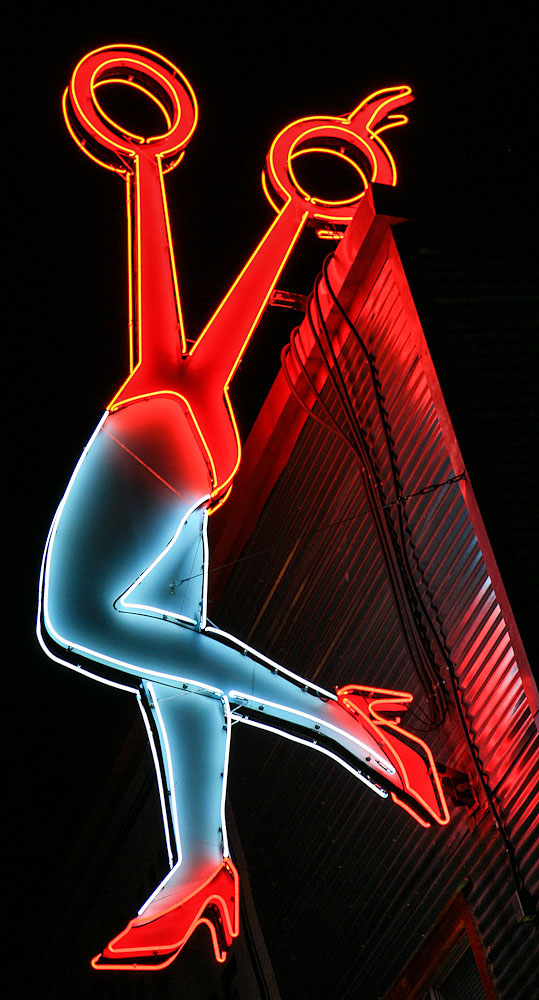
The rooftop neon at Clermont Motor Hotel makes a memorable addition to a drive along Ponce de Leon Avenue. Rising above the brick building, the illuminated lettering has long helped identify one of Atlanta's more colorful lodging landmarks. The hotel has considerably more history than its motor-hotel name suggests, with roots reaching back to the city's apartment-building boom of the 1920s. 02-09
Completed in 1924 as the Bonaventure Arms Apartments, the building originally contained 85 units. It became the Clermont Hotel in 1939 as automobile travel and commercial development changed the surrounding neighborhood. By 1958, the property advertised a mixture of hotel rooms and furnished apartments, accommodating overnight travelers alongside guests needing a longer stay.
Clermont Motor Hotel
Atlanta, GA Photo courtesy Kevin Powers
The basement acquired a reputation of its own through the Clermont Lounge, whose dancers, celebrity visitors, and decidedly unconventional atmosphere made it an Atlanta nightlife institution. Upstairs, however, the hotel deteriorated and closed in 2009. Its uncertain future prompted concern that the building might disappear, but a preservation-minded redevelopment eventually returned the property to hotel use. The restoration retained its distinctive exterior while substantially changing the accommodations inside.
UPDATE: The property reopened in June 2018 as Hotel Clermont, a 94-room boutique hotel with a restaurant, lobby bar, and rooftop gathering space. The familiar rooftop neon remains an important part of its identity above Ponce de Leon Avenue. More than a century after the apartment building opened, this Atlanta landmark is still welcoming overnight guests, with another chapter added to its unusually eventful history. 11-26
Thunderbird Inn
Savannah, GA Photo courtesy Paul Bauke
The giant neon bird at Thunderbird Inn gives motorists along Oglethorpe Avenue a good reason to look up. Its outstretched wings and colorful lettering make the sign as memorable as the Savannah motel behind it, especially when the neon lights up after dark. 04-09
Built in 1964, the forty-two-room motel was designed by John Knox Stacy and developed by Stanley Fulghum. Restoration in 2004–2005 and another remodeling in 2018 preserved its roadside character. RC Cola and MoonPies add a playful connection to the motel's original travel era.
UPDATE: Thunderbird Inn remains open, and its landmark neon continues shining along Oglethorpe Avenue. More than sixty years after opening, the property retains the roadside features that make it recognizable. Good to see this bird stillattracting overnight guests. 11-26
Moon Winx Motel (Gone)
Tuscaloosa, A Photo courtesy Chet Wilson
The smiling crescent moon above Moon Winx Motel was one of Tuscaloosa's most memorable roadside faces. Wearing a top hat and winking at passing motorists, the neon character turned an ordinary search for lodging into something worth remembering. The vertical lettering below helped make the display visible along University Boulevard, part of the old U.S. 11 corridor. 07-01
The motor court traced its beginnings to the 1920s, but its famous sign came much later. Local artist Glenn House designed it in 1959 while working for Rivers Sign Company, reportedly completing the drawing in three hours for fifty cents an hour. The sign survived damage from Hurricane Katrina in 2005, narrowly escaped the destructive 2011 tornado, and received repairs and fresh paint in 2017.
UPDATE: Moon Winx closed in March 2023 following code violations. The sign was sold and removed on March 27, ending its long watch over the highway. Its departure was a substantial loss to Tuscaloosa's roadside landscape, although removal through a sale gives its story a different ending from a trip straight to the scrapyard. 11-26



 Clermont Motor Hotel
 Clermont Motor Hotel

 Moon Winx Motel (Gone)