Oaks Theatre (Closed)
Berkeley, CA Photo courtesy Dave & Debra van Hulsteyn
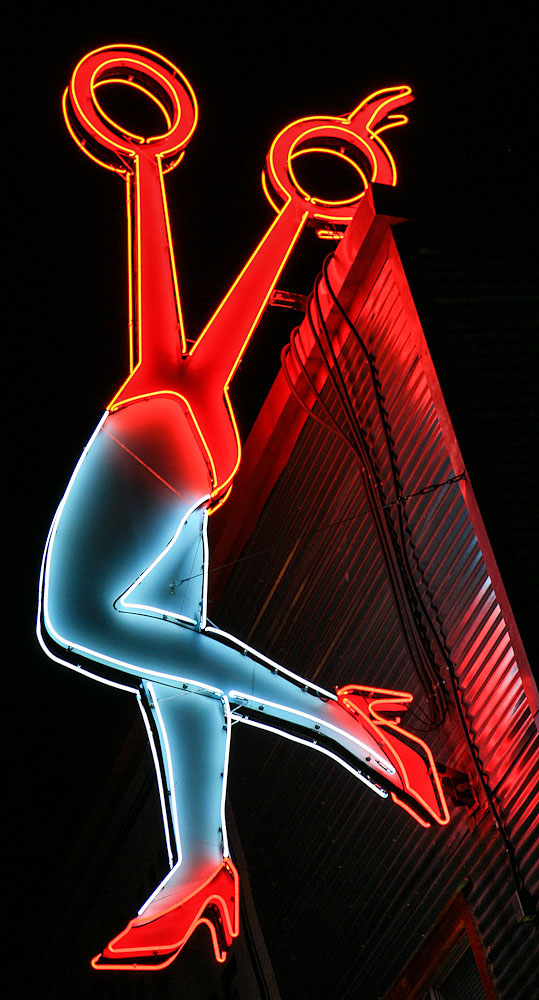
Check out the neon at the Oaks Theatre in Berkeley, lighting up this stretch of Solano Avenue. The Oaks opened on September 15, 1925, with the silent comedy Steppin’ Out, starring Ford Sterling. Designed by the Reid Brothers, who also designed Oakland’s Grand Lake Theatre, this neighborhood movie house dates back to the days when the pictures moved but the actors didn’t talk.
The theatre received its streamlined makeover in 1940, followed by a split into two screens in 1973 and a restoration under Renaissance Rialto in 1994. Generations stopped by for an evening at the movies, with Hollywood and Bollywood features sharing the bill toward the end. Unfortunately, the screens went dark in late 2010, leaving the old Oaks facing a long intermission.
UPDATE: Fortunately, the Oaks found another role, reopening in 2023 as a Touchstone bouldering gym. The historic facade and neon marquee survived, along with original chandeliers and decorative plasterwork inside. Check out the posters for Cliffhanger and Vertical Limit, a fitting nod to the building’s movie days. Looks like visitors now get to do a little cliffhanging of their own. 10-26
Guild Theatre
Menlo Park, CA Photo courtesy Matt Walsh
The nighttime glow outside the Guild Theatre makes a fine attraction along El Camino Real in Menlo Park. Its neon and old theatre styling give passing motorists something to admire, even when the evening’s show isn’t on their itinerary.
Opened in 1926, the Guild spent decades as a neighborhood cinema, showing everything from mainstream movies to independent films. Its moviegoing chapter ended in 2019, but this closing came with another act waiting in the wings.
UPDATE: The Guild reopened as a concert venue in February 2022 and remains active under the nonprofit Peninsula Arts Guild. Touring musicians now take the place of movie stars on the bill. The old theatre still draws a crowd, although the soundtrack now comes straight from the stage. 10-26
Crest Theatre
Sacramento, CA Photo courtesy Dave & Debra van Hulsteyn
There’s plenty of nighttime showmanship outside Sacramento’s Crest Theatre. The tall neon sign and broad marquee give K Street a proper movie-palace greeting. Here’s an entrance that makes even a quick walk past feel a little like opening night.
The building’s entertainment history reaches back to its days as the Empress vaudeville theatre, followed by the Hippodrome. A major remodel introduced the Crest in 1949, with That Midnight Kiss starring Mario Lanza as the opening attraction.
UPDATE: The Crest Theatre in downtown Sacramento will be getting a much needed face-lift. According to the Sacramento Bee, Sacramento officials felt that the Crest "bridges downtown Sacramento's past with its future". The neon will be temporarily removed in the spring to allow for the marquee to be repainted to its original colors. 02-09
UPDATE: The Crest remains an active entertainment venue. Owner Bob Emerick and his daughter Ellie took over day-to-day operations in 2025, with repairs to the neon among the improvements. Films, concerts, and special events continue to give visitors a reason to gather beneath that big marquee. 10-26
Esquire Theatre Sacramento, CA Photo courtesy Dave & Debra van Hulsteyn
Look up at the tall Esquire Theatre sign in downtown Sacramento. Those big illuminated letters gave moviegoers something to aim for along K Street, with the marquee below announcing what was playing inside. The Esquire opened on March 15, 1940, with The Amazing Mr. Williams, starring Melvyn Douglas and Joan Blondell. Apparently, the theatre wanted an amazing attraction to go with its attention-getting sign.
The Moderne movie house was designed by theatre architect William B. David, whose work also included Sacramento’s Tower Theatre. Decades later, the Esquire faced a transformation considerably bigger than a change of lettering on the marquee. The Esquire Plaza development brought a new office tower and an IMAX auditorium to the property, incorporating the historic theatre facade and restoring its familiar marquee. Fortunately, some of the old showmanship survived the construction.
UPDATE: The Esquire returned as an IMAX theatre in 1999 and continues showing movies today. The auditorium behind the entrance may be a different experience from the original neighborhood movie house, but the old name still stands tall outside. Check out the sign before heading in for a feature that gives “the big screen” a whole new meaning. 10-26
Tower Theatre
Sacramento, CA Photo courtesy Dave & Debra van Hulsteyn
Check out the neon-topped Tower Theatre in Sacramento, where the name pretty much tells you where to look. This landmark opened in November 1938 with Algiers, starring Charles Boyer and Hedy Lamarr. Designed by William B. David, the theatre featured a tower rising some 93 feet above the street. Looks like finding the place after dark wasn’t going to be much of a problem.
There’s quite a bit of music history tucked beneath that tower, too. Russ Solomon began selling records inside his father’s Tower Drugs, which shared the theatre building and its name. That little sideline helped set the stage for Tower Records, the business he founded in 1960. Before the familiar yellow-and-red record stores spread far beyond Sacramento, the Tower name was already drawing customers to this corner.
UPDATE: The Tower remains an operating cinema, showing independent and international films along with special programs and classic movies. Its original single auditorium was divided into three screens in 1974, but the distinctive exterior still gives the place plenty of old movie-house character. Fortunately, this Sacramento tower continues to offer something to see both outside and on the screen. 10-26
Bridge Theatre (Closed)
San Francisco, CA Photo courtesy Dave & Debra van Hulsteyn
Check out the red neon at the Bridge Theatre in San Francisco, outlining this neighborhood movie house against the evening sky. The theatre opened in July 1939 with Love Affair, starring Irene Dunne and Charles Boyer. Its name paid tribute to the Golden Gate Bridge, which had opened just two years earlier. A considerably smaller attraction here, but one with a marquee all its own.
The Bridge began as a bargain neighborhood stop, showing movies that had already worked their way through other San Francisco theatres. By the mid-1950s, it had become a first-run art house, bringing foreign films and prestige pictures to Geary Boulevard. The vertical sign and marquee dated back to the beginning, even as renovations changed the entrance and moved the ticket booth from its original central spot.
UPDATE: The Bridge closed on December 27, 2012, with The Perks of Being a Wallflower as its final film. Fortunately, the building found another use when the San Francisco Baseball Academy opened inside in 2015, preserving the facade and blade sign. The movie seats gave way to batting cages, bringing a different sort of hit to the old neighborhood theatre. 10-26
Orinda Theatre
Orinda, CA Photo courtesy Devil Doll
Check out the glowing marquee at the Orinda Theatre, bringing a little movie-palace sparkle to town. Built for Donald Rheem and designed by Alexander Aimwell Cantin, the theatre opened on December 27, 1941, with Texas, starring William Holden and Glenn Ford. The tall sign catches your eye outside, while the elaborate interior gives moviegoers plenty to admire before the lights go down. 10-05
The murals inside were painted by Anthony Heinsbergen, whose work appeared in hundreds of theatres. Here, figures representing air, fire, water, and earth added a little extra drama around the screen. Unfortunately, all that decoration didn’t keep demolition from threatening the Orinda in 1984. Preservation supporters rallied, and the surrounding Theatre Square development was built around the theatre, which reopened in 1989. Fortunately, the old movie palace got another act.
UPDATE: The Orinda continues showing movies, with classic-film programs, concerts, and special events adding to the lineup. Restored favorites still get their turn in the grand 750-seat auditorium, giving audiences a chance to enjoy the theatre much as earlier generations did. That familiar marquee remains a welcome sight, especially considering how close this place came to disappearing from the picture. 10-26



 Oaks Theatre (Closed)
 Guild Theatre
 Crest Theatre
 Esquire Theatre
 Tower Theatre
 Bridge Theatre (Closed)