Wildwoods, NJ --- The Wildwoods is located off the Jersey Shore and has been a popular resort for families for years. For fans of the mid-century Doo Wop architecture, the Wildwoods have almost no peer with scores of roadside signage from the 50's and 60's. However, with the turn to the 21st century, real estate values soared and a condo explosion ensued. Many unique old signs and buildings have been demolished this decade. Here are many of the Wildwoods finest, some of which are present and some of which are now gone.
The Wildwoods features a trove of mid-century motels and marquee
in danger of being lost.As
you travel down the street along the Jersey shore, you are greeted with
an intersection of space-age mid-century motels. You step out and walk
to the end of the block to get a look down the long drag. What's this?
Oh, a fake palm tree. Welcome to the Wildwoods.
Explore the Wildwoods’ classic motels, where soaring rooflines, playful themes, and colorful signs brought Doo Wop style to a family vacation. These views capture poolside landmarks and seaside favorites, including places that have disappeared from the shore.
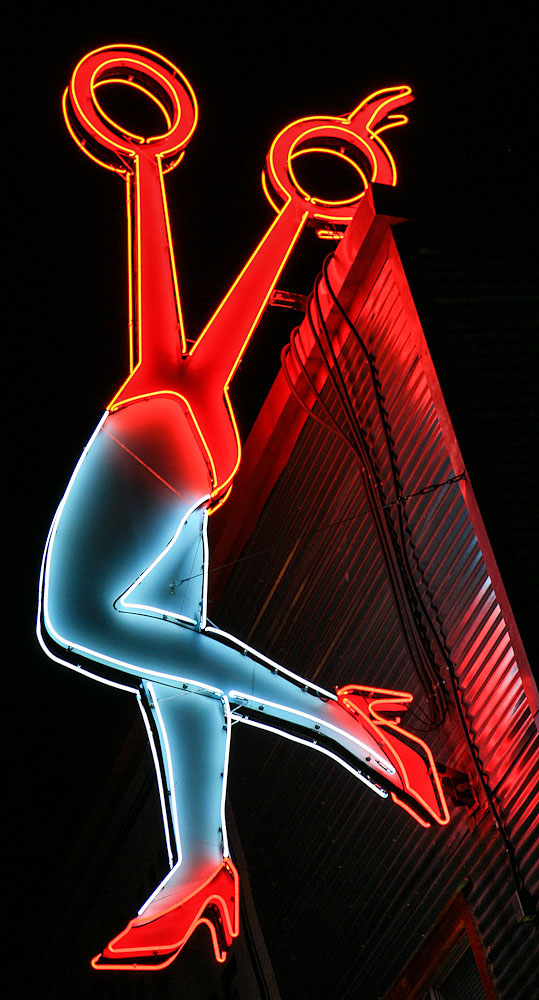
Look for neon palms, sweeping arrows, and bold lettering along the Wildwoods’ streets. These imaginative signs gave motels and neighborhood businesses personalities of their own, with plenty to admire on the way back from the beach.
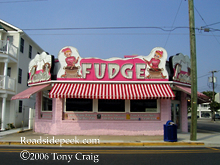
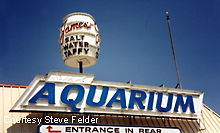
Take a break from the beach for the Wildwoods’ diners, restaurants, and roadside snack stops. Colorful signs and distinctive buildings made grabbing a burger or an ice cream part of the seaside scenery.
Wildwood, Wildwood Crest, and North Wildwood became especially colorful during the automobile vacation boom of the 1950s and 1960s. Independent motels competed with tropical names, bright colors, rooftop signs, and a little architectural imagination. The style became known locally as Doo Wop, and its surviving buildings form an unusually concentrated collection of mid-century resort architecture.
Carousel Motel
Wildwood Crest, NJ Photo by RoadsidePeek.com
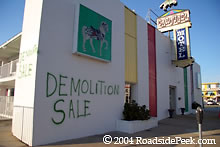
By the early 2000s, rising property values had made the land beneath these modest motels especially attractive to developers. Buildings that had welcomed generations of vacationers began disappearing for condominium construction. The Ebb Tide fell in 2003, the Satellite in 2004, and the Rio in 2005. Whole stretches of the familiar motel landscape changed within just a few seasons.
Columbus weekend of 2004 saw the demolition of the Satellite Motel in
full force. A few other motels such as the Avanti and the Carousel had
"demo" written on them. The Tally Ho's office area already had
the windows and doors busted out. The Eden Roc was closed... and eerily
silent.
Lollipop Motel
North Wildwood, NJ Photo courtesy Mark Hackett
All
throughout town, new homogenized condominiums have sprouted up, much like
magic mushrooms after a hard rain. While there's always a place for living
quarters of all types, it would be a shame and a mistake for the Wildwoods
to lose both its identity and architectural capital. If the area does
indeed hold the largest collection of mid-century architecture in all
the land, it would be a shame to see it disappear.
Unfortunately,
like all good mid-century areas these days (as the area around Disneyland
in Anaheim comes to mind), threats of becoming "resortized"
or "blandified" are becoming all too real. And yes, these threats
also create new words that should be added to the English dictionary for
all you Scrabble addicts out there.
Tally Ho Motel office Photo by RoadsidePeek.com
The Doo Wop Preservation League has worked to keep that identity visible, encouraging restoration and helping owners recognize the value of their unusual buildings. Its Doo Wop Experience museum and sign garden preserve pieces of demolished properties, giving some displaced neon a second home. Saving a sign is welcome news, though keeping it above an operating motel preserves considerably more of the original experience.
Made up of Wildwood Crest, Wildwood, and North Wildwood, the Wildwoods
feature doo wop signage and architecture that looks like they came straight
from the 50's and 60's. In fact, there is a local non-profit preservation
group dedicated specifically to fostering awareness of this era and the
"largest collection of mid-century or Doo Wop architecture found
in the United States" called the Doo
Wop Preservation League.






 Carousel Motel
 Lollipop Motel
 Tally Ho Motel office