Barnum School
Birmingham, MI Photo courtesy Richard Weiss
Soon to be another blank lot is the site of Barnum School in Birmingham, MI. The fence of doom already surrounds the building as the City of Birmingham plans to demolish the school to build a a park. 07-08
The school is gone, but its historic entrance arch remains as the centerpiece of Barnum Park, and the restored storybook fireplace is on display at the Birmingham Museum. 07-26
Avoca Bank Building (Closed)
Avoca, MI Photo courtesy Richard Weiss
Check out the Avoca Bank Building in Avoca, Michigan. This little bank didn't need a towering entrance to make an impression. Its brickwork, stone trim, and compact design gave it plenty of small-town character. 10-08
The building recalls the days when banking meant a trip downtown, often combined with shopping and catching up with neighbors. Farming and railroad traffic helped support Avoca's businesses, and a local bank was an important part of keeping things moving. The exact construction date remains uncertain, but the exterior still gives away its original purpose.
UPDATE: The former bank has been converted into a private residence, keeping the building in use after its banking days ended. Fortunately, much of its distinctive exterior survives. It's a neat example of finding room for a new use inside an old Main Street landmark. 07-26
Hancock County Courthouse
Findlay, OH Photo courtesy Richard Weiss
Look up at the Hancock County Courthouse in Findlay, Ohio. The clock tower alone is worth a stop, especially with a 16-foot statue of John Hancock standing 130 feet above the ground. Apparently, a modest rooftop decoration wouldn't do. 02-08
Built during Findlay's oil and gas boom, the courthouse was dedicated on October 27, 1888. Architects Weary and Kramer designed the elaborate building, which cost $305,272. Figures representing Law, Justice, and Mercy join Hancock on the tower, adding details that are easy to miss from street level.
UPDATE: The courthouse continues to house Hancock County's Common Pleas Court and remains a downtown landmark. Between the heavy masonry, arched openings, and towering namesake, there's plenty to admire before you ever get through the front door. 07-26
Redpath Memorial Presbyterian Church
Cross Village, MI Photo courtesy Richard Weiss
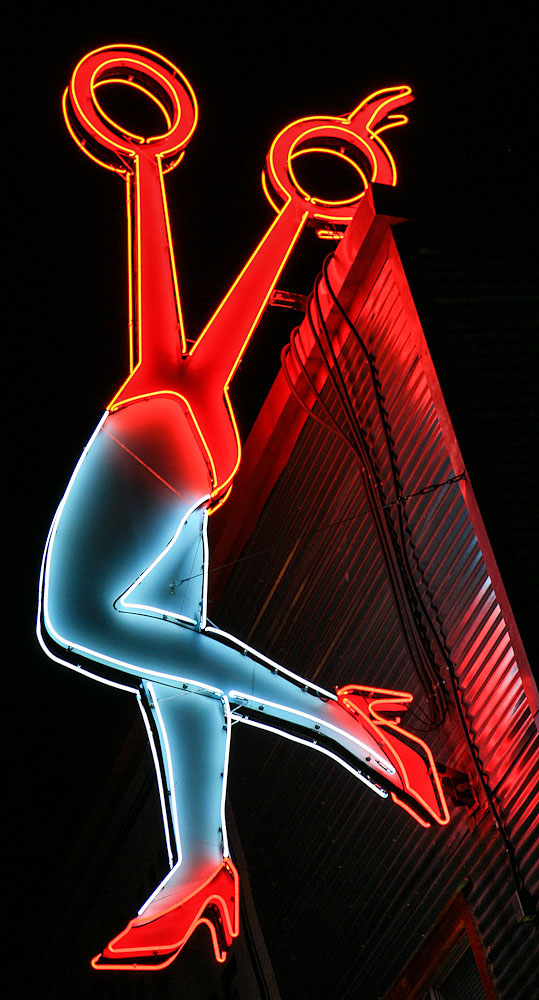
Here's Redpath Memorial Presbyterian Church in Cross Village, Michigan. Built from local fieldstone, this little church looks right at home near the northern end of the Tunnel of Trees. It's worth slowing down for before heading over to nearby Legs Inn. 02-08
The congregation organized in 1888, but its wooden church was lost in the fire that swept through town in 1918. Reverend John Redpath, then about 80, raised money and helped with construction of the replacement, completed in 1921. The church received his name after his death in 1926.
UPDATE: After years of vacancy and neglect, summer worship resumed in 1965. The stone church continues that seasonal tradition today, a welcome turnaround for a building once nearly sold for use as a store. Fortunately, this Cross Village landmark got another chance. 07-26
Michigan Central Railroad Depot (Closed)
Ann Arbor, MI Photo courtesy Richard Weiss
Here's the Michigan Central Railroad Depot in Ann Arbor, Michigan. With its rough granite walls, broad arches, and steep rooflines, this old station makes quite an impression. These days, visitors come for dinner rather than a departure time. 05-08
Built in 1886, the depot was designed by the Detroit firm of Spier and Rohns in the Richardsonian Romanesque style. It served generations of passengers before restaurateur Chuck Muer gave it a new purpose. The Gandy Dancer opened here in 1970, taking its name from the nickname for railroad track workers.
UPDATE: The former depot continues to operate as the Gandy Dancer restaurant. Trains still pass beside the building, keeping the railroad atmosphere alive long after the ticket counter closed. That's a pretty fitting second career for one of Ann Arbor's best-looking railroad landmarks. 07-26
Old Federal Building (Closed)
Hannibal, MO Photo courtesy Richard Weiss
Check out the Old Federal Building in Hannibal, Missouri. The red brick, limestone trim, steep gables, and arched entrances make this Broadway landmark look almost like a castle. Government buildings certainly knew how to dress up back then. 07-08
Constructed between 1884 and 1888, the building at 600 Broadway housed Hannibal's post office, federal courtroom, and government offices. Its design came from the office of Treasury Supervising Architect Mifflin E. Bell. Federal court operations moved to a newer building in 1960, leaving this elaborate structure ready for another assignment.
UPDATE: The Old Federal Building survives with commercial office uses and much of its historic exterior intact. Listed on the National Register of Historic Places in 1980, it remains worth a look while exploring downtown Hannibal—especially if you enjoy buildings with a little extra stonework overhead. 07-26
Hannibal City Hall
Hannibal, MO Photo courtesy Richard Weiss
Here's Hannibal City Hall in downtown Hannibal, Missouri. Its limestone exterior and classical detailing give this old municipal building plenty of presence at Fourth and Broadway. This was clearly meant to be a building that would stick around. 07-08
The story began with Henrietta Myers, who left the corner property to the city in 1903 for a new City Hall. A bond issue in 1909 helped make construction possible, and the building opened in 1910. Broad Corinthian pilasters and substantial stonework gave the city offices a suitably impressive home.
UPDATE: The building continues to serve as Hannibal's municipal headquarters more than a century after opening. Its appearance has changed in places over the years, but the historic exterior remains a familiar downtown sight. It's good to find an old public building still earning its keep. 07-26
DeKalb County Courthouse
Auburn, IN Photo courtesy Richard Weiss
Check out the DeKalb County Courthouse in Auburn, Indiana. The broad steps, massive columns, and limestone exterior give the town square quite a centerpiece. This courthouse makes its presence known without needing a tall clock tower. 10-08
Constructed between 1911 and 1914, the building was designed by Fort Wayne architects Mahurin and Mahurin and dedicated on June 18, 1914. Indiana limestone and Vermont marble helped give it a grand appearance, but the real surprise is inside: a colorful Florentine art-glass dome above the rotunda.
UPDATE: The courthouse remains in use and continues to anchor downtown Auburn. During the annual Auburn Cord Duesenberg Festival, the surrounding streets provide a fitting setting for classic automobiles. Between the courthouse architecture and the cars, there's usually plenty worth stopping to admire around this square. 07-26



 Avoca Bank Building (Closed)
 Hancock County Courthouse
 Redpath Memorial Presbyterian Church
 Michigan Central Railroad Depot (Closed)
 Old Federal Building (Closed)
 Hannibal City Hall
 DeKalb County Courthouse