Busher’s Club (Gone)
Sacramento, CA Photo courtesy Dave & Debra van Hulsteyn
Check out the bubbly neon at Busher’s Club along Sacramento’s Auburn Boulevard. Animated bubbles climbed through an enormous cocktail glass, while the globe below offered an unusual naming arrangement: Jerry’s on one side and John’s on the other. Apparently directions depended on which way you were traveling.
Dating to at least 1950, Busher’s stood along the old Highway 40 route. Under the Visintainer family, smokehouse barbecue ribs supplied another reason to stop beyond the drinks and entertainment. The club continued operating until 1994, leaving its colorful roadside display behind after the doors closed.
UPDATE: The sign was removed and reportedly spent time lying flat on the roof. The nightclub building was later demolished, and the property was redeveloped for commercial use. The marquee’s whereabouts remain unknown, leaving photographs to preserve that bubbling cocktail and its two-name introduction. 11-26
Gold Spike (Gone)
San Francisco, CA Photo courtesy Dave & Debra van Hulsteyn
The Gold Spike in San Francisco’s North Beach advertised Italian dinners with a towering railroad-spike-shaped neon sign. Not the first shape that comes to mind when thinking about pasta, but certainly worth stopping to investigate. Inside, the portions offered another reason to remember the place.
Attilio Mechetti opened a candy store in 1920 and began serving Italian meals to upstairs boarders during Prohibition. Those early 25-cent dinners grew into a family-style restaurant with checkered tablecloths, house wine and plenty of garlic bread. Dollar bills, business cards and mounted animal heads eventually covered much of the interior, giving customers something to examine between courses.
UPDATE: Gold Spike closed on February 20, 2006, after 86 years and four generations of family ownership. The building was remodeled for other businesses, and the neon spike was removed. Its whereabouts remain unknown. Another North Beach dinner stop gone, along with the oversized hardware that announced it. 11-26
Hollywood Cafe
Lodi, CA Photo courtesy Dave & Debra van Hulsteyn
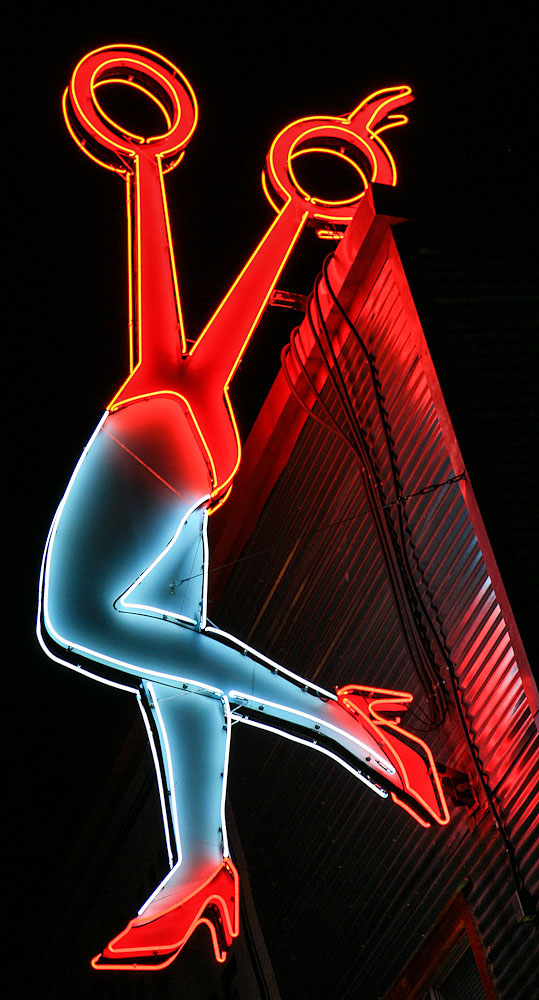
Check out the glowing neon marquee for the Hollywood Cafe in Lodi. The restaurant opened in 1944 and remains one of the city’s oldest surviving eateries. Its old script sign adds a little roadside glamour to Cherokee Lane, especially when the neon comes to life after dark.
According to local lore, Western movie star Slim Pickens once stopped at the cafe after filming nearby. He remarked that the cozy restaurant reminded him of an actors’ hangout in Southern California, inspiring the owner to give it the Hollywood name.
Hollywood Cafe
Lodi, CA Photo courtesy Scott Strickland
Inside, the theme continues with red vinyl booths, checkered floors, a working jukebox, and walls filled with Hollywood memorabilia and local history. The menu stays close to traditional diner territory, with large portions of chicken-fried steak, biscuits and gravy, and other breakfast and lunch favorites.
UPDATE: Now known as Hollywood Family Café & Catering, the restaurant remains open along Cherokee Lane. Its vintage script sign has been restored and continues lighting up the roadside. 09-26
Fisherman's Grotto #9
San Francisco, CA Photo courtesy Justin Montano
With a name like Fisherman's Grotto #9, it is not hard to imagine that fishermen would appear just about everywhere. The restaurant’s familiar mascot was a pipe-smoking fisherman dressed in a bright yellow raincoat and matching hat. He showed up on the signs, menus, carpets, and plenty of other places around the building. No chance of wandering inside and mistaking this for a steakhouse.
The Fisherman's Grotto #9 is located along San Francisco's Fisherman's
Wharf area. Sometimes bustling at night, this area serves up chowder,
crab, and other seafood delights to visitors and locals alike.
Fisherman's Grotto Design
San Francisco, CA Photo courtesy Justin Montano
Sicilian immigrant fisherman Michael Geraldi opened Fishermen’s Grotto in 1935. It became the first full-service sit-down restaurant at San Francisco’s Fisherman’s Wharf, growing from the humble fish stall Geraldi had operated beside the waterfront. The No. 9 in the name came from the number assigned to that original stall, a small reminder of the restaurant’s beginnings that remained part of the name for nearly 90 years.
The fisherman theme continued throughout the restaurant. The little mascot was woven into the royal blue carpeting, while servers wore blue-and-gold jackets that matched his rain gear. Outside, the huge neon marquee and prominent No. 9 became familiar sights above the lagoon. All that nautical imagery may have been a little excessive, but subtlety was never really the point at Fisherman’s Wharf.
Fisherman's Grotto Image
San Francisco, CA Photo courtesy Justin Montano
Over the years, the restaurant expanded into a massive waterfront dining complex where visitors could settle in for seafood while watching fishing boats move around the harbor. The Geraldi family operated the Grotto for three generations, keeping it connected to the Sicilian fishing families who helped shape the Wharf. The restaurant was sold in 2016, but the old name, mascot, and familiar waterfront sign remained.
UPDATE: Following a dispute over unpaid rent and eviction proceedings, Fishermen’s Grotto No. 9 closed in 2024. The building and its famous fisherman sign survived the closure, although the neon remained dark. Woods Beer & Wine Co. is now preparing a taproom and cafe in part of the former restaurant, with outdoor seating beside the new public plaza. The seafood house may be gone, but the old Grotto space and its pipe-smoking fisherman are getting another chance to welcome visitors to the Wharf. 09-26
Fisherman's Grotto Design
San Francisco, CA Photo courtesy Justin Montano
Fisherman's Grotto Diorama
San Francisco, CA Photo courtesy Justin Montano


 Hollywood Cafe